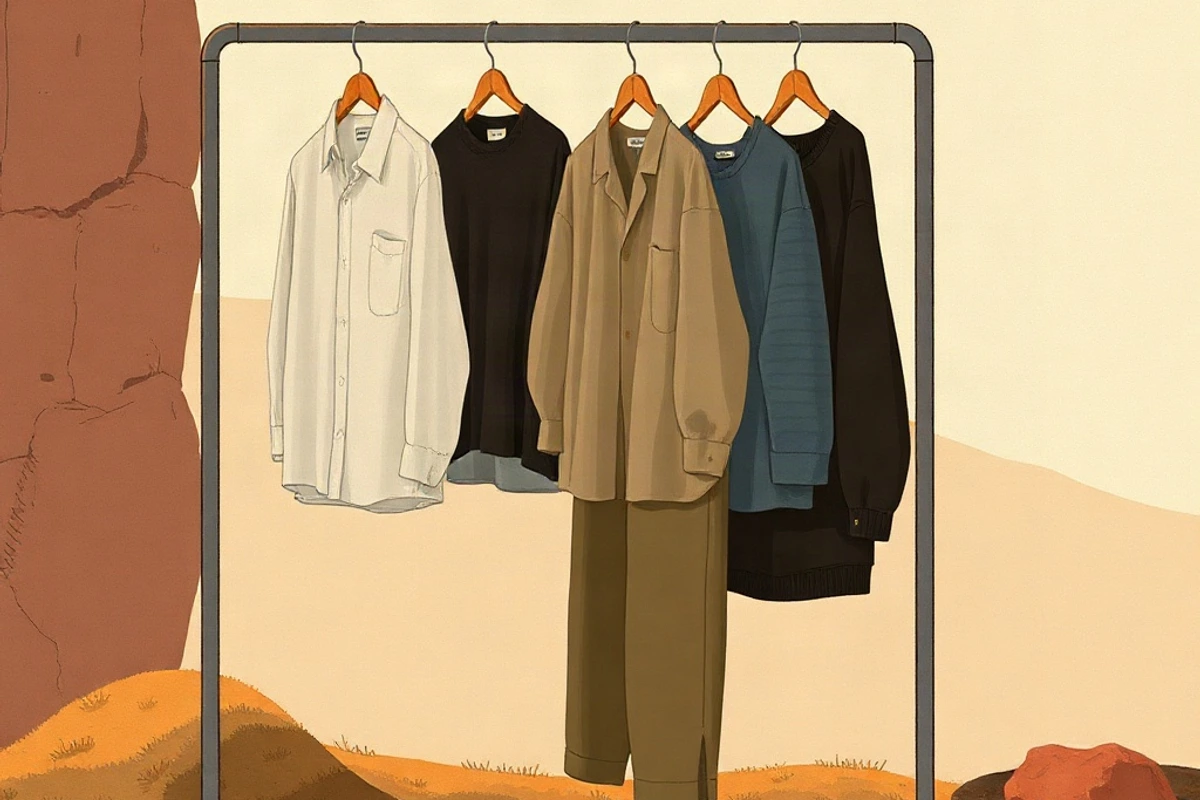
The wardrobe edit
How to Dress Around Three Reliable Pieces
Choose anchors that already earn their place
Look at the clothes you reach for without much negotiation and choose three pieces to anchor the week. They might be trousers, a skirt, a dress, a jacket, a knit, or shoes that work with more than one outfit. Comfort is part of the information. So are the weather, movement, care needs, and occasions your week really includes. The exercise is not a test of how many combinations you can invent. It is a way to see which pieces support your life and which clothes ask you to become someone else before you can wear them. If one anchor needs a repair, note that instead of building the whole plan around it. Choose pieces that can tolerate the week’s real pace, including sitting, walking, carrying, or changing temperature. Reliable does not have to mean plain; it means you know how the piece behaves when you are busy.
Build the first outfit plainly
Pair each anchor with the simplest layer that makes sense: a shirt, tee, sweater, tights, or another piece you already trust. Notice proportions, temperature, and how easily you can move. A reliable outfit often looks clear before it looks inventive. Write down what works or take a private photo if that helps you remember. You can use the same base more than once during the week; repeating a useful combination is not a failure of style. It is evidence that the outfit earns its place. Keep the goal practical enough that getting dressed becomes easier rather than another project to maintain. Check the small details that often decide whether you will wear it: pockets, fastenings, layers that stay in place, and whether the fabric needs special care. Those details are part of personal style because they affect whether the outfit can leave the bedroom.
Change the feeling with one layer
For the second and third versions, change one variable at a time. Add a cardigan, overshirt, jacket, scarf, belt, or different shoe. Try a more relaxed layer for errands and a sharper one for a meeting or dinner, if those are part of your week. Accessories can change the direction of an outfit without asking you to replace the anchor. Pay attention to what you can actually reach, wash, and wear comfortably. If the forecast changes, let the layer solve the problem instead of rebuilding every outfit. The most useful variety may be a small shift in texture, color, or proportion rather than a dramatic transformation. If an accessory makes you adjust it all day, it is not the right tool for this plan. Keep the pieces that let you pay attention to the day instead of to your clothes.
Plan for the week you have
Place the three anchors alongside the real calendar: workdays, care, commuting, rest, weather, and any event that needs a different level of polish. Leave one open option for a late change or a day when comfort matters more than the original plan. If you discover a gap, record it as information for a future purchase or repair, not as a reason to shop immediately. A wardrobe becomes more reliable when you learn from actual use. Keep the combinations that felt good, release the ones that required too much effort, and let personal style grow from the evidence of your own week. At the end, notice which three pieces did the most work and which ones never left the hanger. That small record can guide the next laundry day, packing list, or careful purchase without making your wardrobe a constant self-improvement project. You may find that the most useful next step is not adding a new item but washing, repairing, tailoring, or storing an existing one where it can be seen. Reliability often comes from care rather than quantity.